
Suzuki walked away from the United States passenger car business in November 2012, when American Suzuki Motor Corporation entered Chapter 11 bankruptcy after a twenty-seven-year run. The reasons listed at the time were weak profitability, pressure from a strong yen, a narrow product range, and growing pressure from rival brands. Even so, interest in the marque never disappeared, especially among people drawn to compact off-road vehicles.
One model keeps returning in discussions, even though American buyers never received it through official channels. The Suzuki Jimny stayed out because local safety and emissions rules blocked entry. Before that, the Suzuki Samurai had a defined sales window from 1985 through 1995, and its legacy still feeds demand around the newer box-shaped successor.
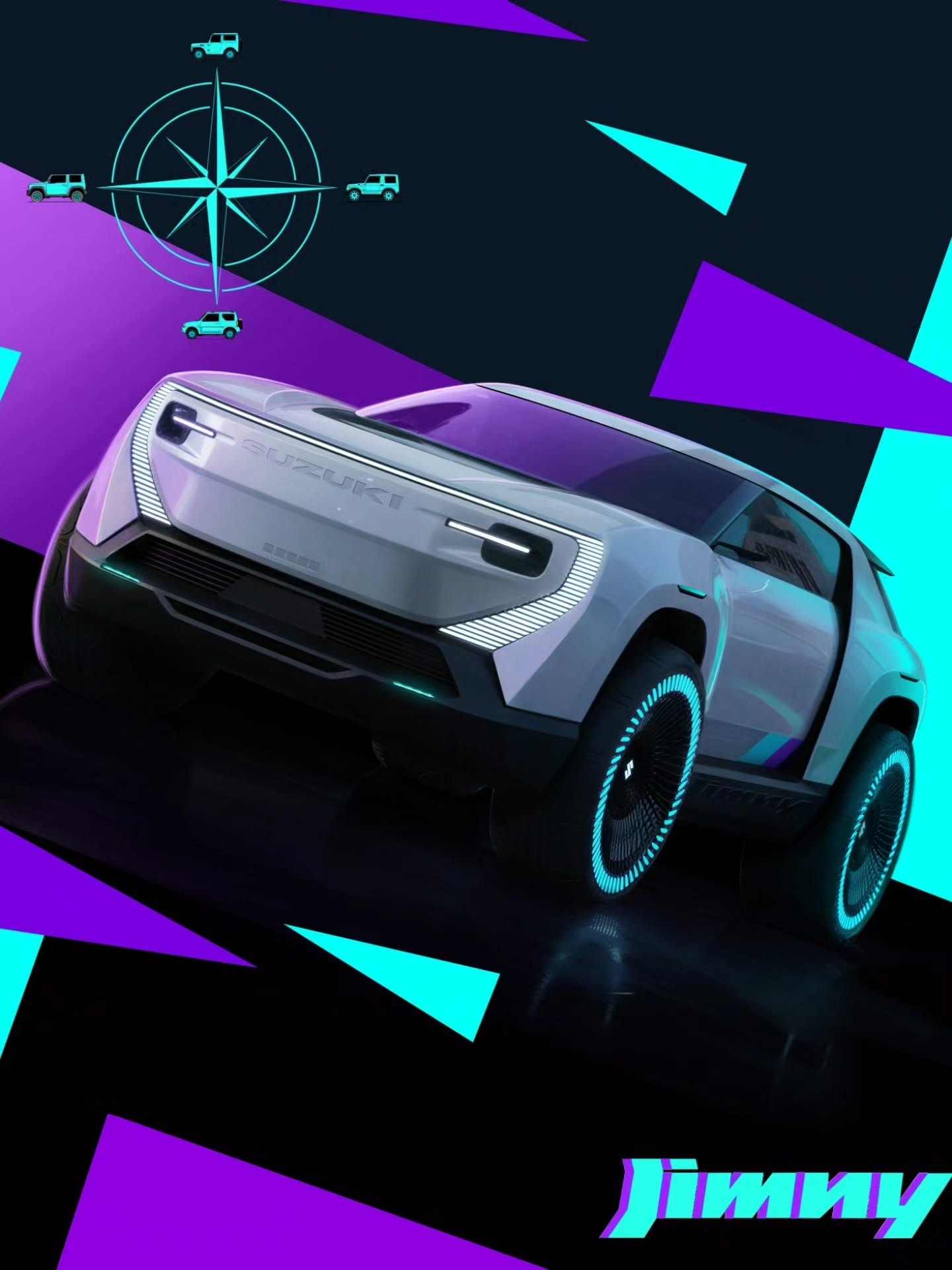
This time, the idea comes from Christopher Giroux, known online as chrisgx13. He works as a senior car designer at Ford Europe in Germany, and the source also notes his personal Mazda MX-5 Miata RF, ND. His latest study does not follow factory plans. It stays a private digital proposal built around a different direction for the current Jimny shape.
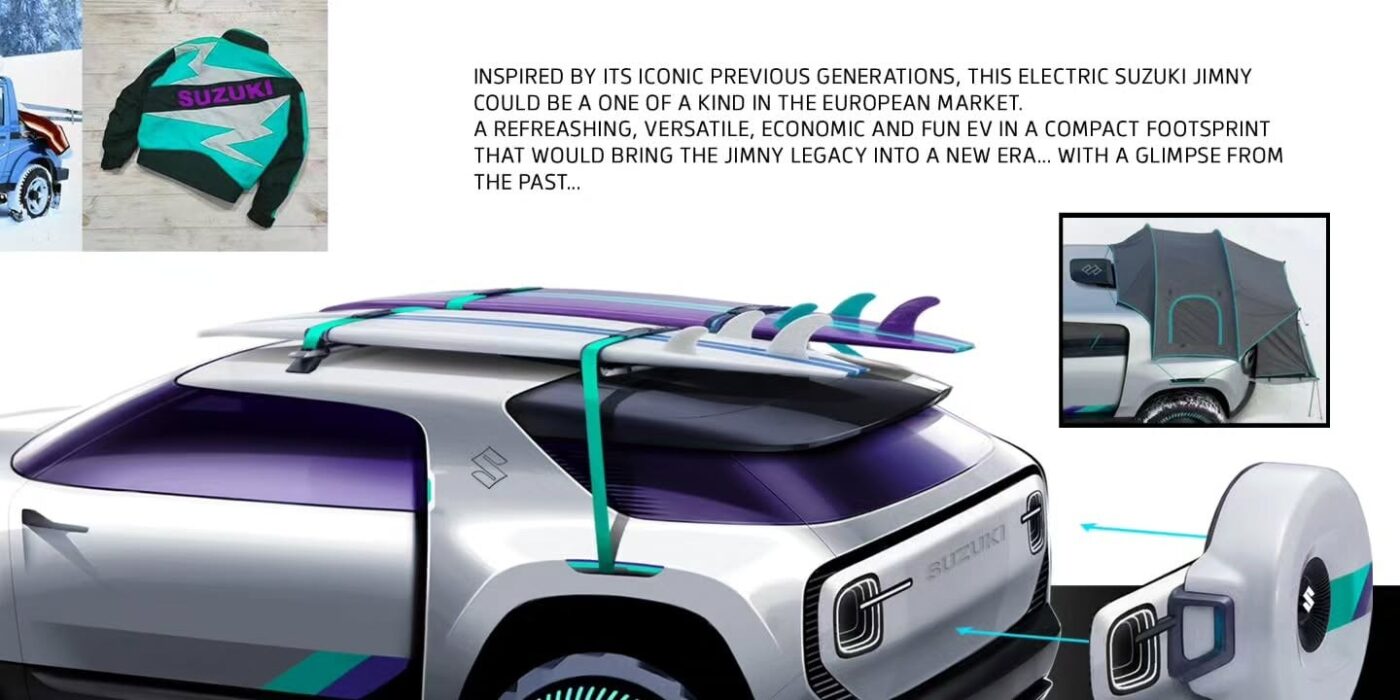
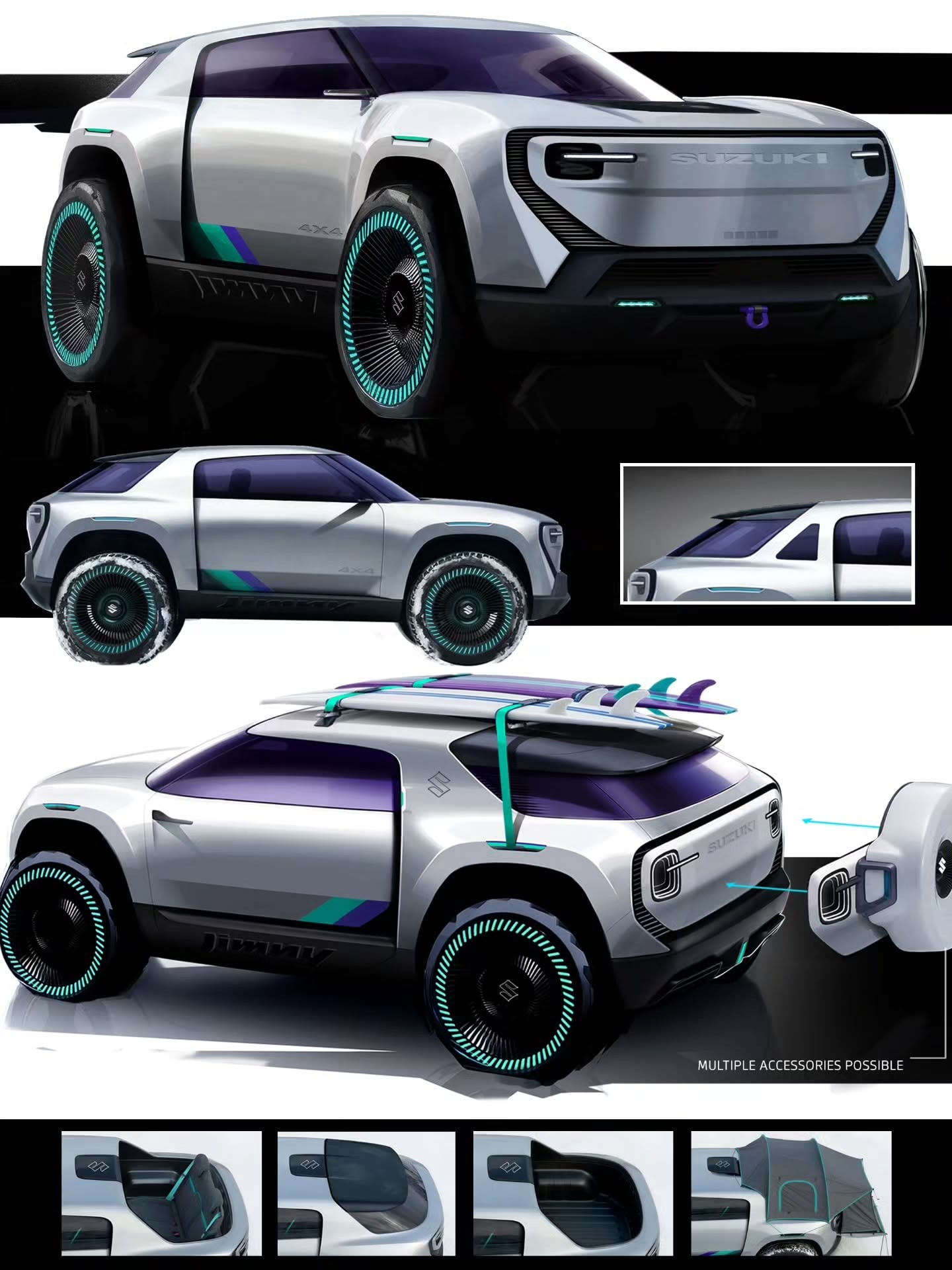
The project shifts the vehicle into electric territory. Giroux keeps visual links with older Jimny generations and pulls cues from special versions seen during the 1980s and 1990s. Then he changes the stance, softens some surfaces, and gives the concept a cleaner face. There are two body interpretations, not one.
A two-door sport utility version appears first. Then the same design language stretches into a two-door ute. The pickup variant carries outdoor equipment aimed at surfing and camping use, which changes the mood of the concept without altering the basic proportions too much. One image feels rugged, another feels more leisure-focused. The idea moves between both without forcing either.
Europe also enters the discussion because Suzuki had earlier used the N1 commercial classification to keep the Jimny available under certain emissions rules. That route closed later, so the model lost access again. In this electric form, the proposal points toward a different route back.
The article links the concept to another market question. Ford is developing an affordable electric truck for around thirty thousand dollars in America. If low-cost battery trucks gain room there, a compact Suzuki with similar pricing logic starts to look less distant. Not close, maybe not soon either, though the thought is easy to follow. For a brand absent from North America for years, this sort of rendering keeps the conversation alive.